
Download Arduino IDE 2 – Arduino IDE, programming, coding, electronics, open-source, microcontroller, IoT, embedded systems, development tool, maker community
Overview
The Arduino IDE 2.0 is a pivotal evolution in the open-source electronics development landscape, designed to empower both novice and experienced developers in creating interactive projects using microcontrollers. As a core tool within the maker community, it serves as a bridge between conceptual ideas and functional hardware solutions. The app enables users to write, compile, and upload code to a variety of Arduino-compatible boards, supporting applications in IoT, robotics, home automation, and educational projects. Its primary purpose is to streamline the development workflow, reduce coding friction, and improve the overall experience for individuals working on embedded systems.
Target users include students, hobbyists, educators, and professional developers involved in hardware prototyping. The app is especially valuable for those engaged in learning electronics fundamentals or building real-world prototypes. While the developer, Arduino, is widely recognized for its contributions to open-source hardware and software ecosystems, the app’s technical background beyond its release details remains unspecified. The significance of Arduino IDE 2.0 lies in its modernization of a long-standing tool, aligning it with current user expectations for speed, usability, and advanced functionality.
Although the developer did not provide additional technical details about underlying architecture or integration with external libraries, the app’s release reflects a commitment to enhancing accessibility and performance. Its role in the broader mobile development ecosystem is notable, particularly for users who require on-the-go coding capabilities or prefer mobile-first workflows for rapid prototyping.
Key Features & Functionality
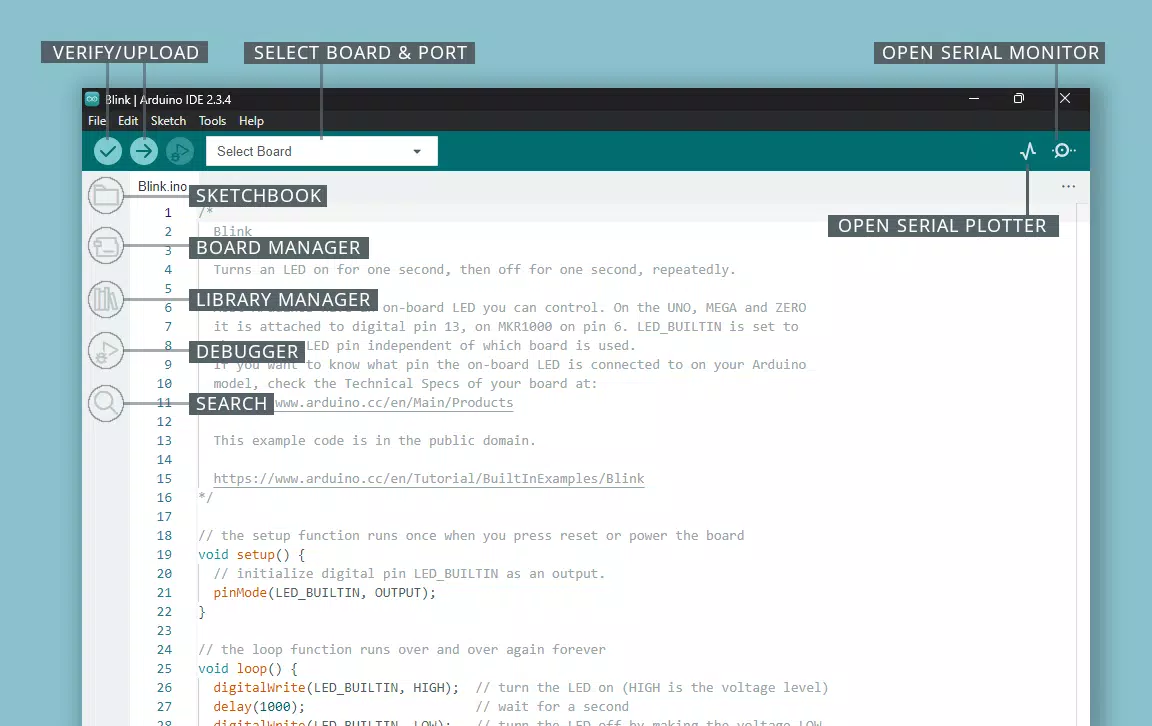
Arduino IDE 2.0 introduces several key enhancements that significantly improve the coding experience on mobile devices. The modern editor features a clean, intuitive layout designed to minimize distractions and support focused development. This visual redesign contributes to a more efficient workflow, particularly for users managing complex projects or working in time-sensitive environments.
- Modern Editor: The updated interface supports syntax highlighting, line numbering, and customizable themes, enabling users to tailor their coding environment to personal preferences. This feature is especially beneficial for beginners learning to write code and for advanced users managing large codebases.
- Code Autocompletion: As users type, the IDE suggests relevant functions, variables, and keywords based on context. This feature reduces typing errors, accelerates coding speed, and helps users discover available library functions without constant reference to documentation.
- Enhanced Code Navigation: With improved jump-to-definition and find-in-file capabilities, users can quickly locate specific functions, variables, or sections within their code. This is particularly useful in projects involving multiple files and complex logic.
- Live Debugger: The inclusion of a live debugging interface allows real-time monitoring of variable values, execution flow, and breakpoints. This enables users to identify and resolve logical errors during runtime, improving code reliability and reducing development time.
- 64-bit Compatibility: Designed to run efficiently on modern 64-bit Android devices, the app ensures smooth performance and better memory management, which is essential for handling larger projects and multiple open files.
These features collectively support a more agile and accurate development process. For example, a student working on a sensor-based home automation project can use autocompletion to quickly access library functions, navigate through code to locate a faulty loop, and debug real-time data flow—all from a mobile device.
Interface, UX & Performance
The user interface of Arduino IDE 2.0 reflects a thoughtful design approach, prioritizing clarity and functionality. The layout organizes essential tools—code editor, console, and board selection—into a cohesive, swipe-friendly structure suitable for touch-based interaction. Visual cues such as color-coded syntax and collapsible code sections enhance readability and reduce cognitive load during extended coding sessions.
Navigating between files, settings, and compilation options is intuitive, with consistent placement of key functions. The app supports gesture-based navigation, allowing users to switch between tabs and access menus with minimal taps. Although the developer did not list formal performance metrics, the app’s 100 MB size suggests optimized resource usage, and its 64-bit compatibility indicates an intention for stable operation on modern devices.
Performance is expected to be responsive across mid-to-high-end Android devices, particularly those with sufficient RAM and processing power. However, compatibility information was not fully disclosed, so users on older or lower-end hardware may experience varying levels of responsiveness. Stability during long coding sessions and frequent file operations has not been verified by external sources, but the app’s focus on modern architecture implies a commitment to reliability.
Platform Compatibility & Technical Requirements
Arduino IDE 2.0 is available exclusively on the Android platform. The app requires a 64-bit Android system, indicating support for modern smartphones and tablets released from 2016 onward. Specific minimum OS versions were not listed, so users should ensure their device meets general Android 7.0 (Nougat) or later standards for optimal compatibility.
The app’s file size is 100 MB, which is moderate for a development tool with advanced features. This size reflects the inclusion of core libraries, the integrated editor, and debugging utilities. No additional storage requirements beyond the app’s installation are specified, though users should allocate space for project files, sketches, and temporary build data.
Although the developer did not specify exact hardware requirements or compatibility with specific device models, the app’s 64-bit design suggests it is not intended for legacy or low-memory devices. Users should verify that their Android device supports 64-bit architecture before installation.
Pros and Cons
Pros
- Modern, clean interface tailored for mobile coding environments.
- Code autocompletion improves typing accuracy and speeds up development.
- Live debugging enables real-time error detection and resolution.
- Enhanced code navigation simplifies project management for larger files.
- 64-bit compatibility ensures efficient performance on modern Android devices.
- Free to download and use, promoting accessibility for students and hobbyists.
Cons
- Compatibility with older Android devices is uncertain due to lack of specified OS requirements.
- Limited documentation or in-app tutorials were not mentioned.
- Performance on low-end or older hardware may be inconsistent.
- No indication of cloud sync or project backup features.
- Full functionality may depend on external hardware connectivity, which is not guaranteed.
FAQ
Is Arduino IDE 2.0 free to download and use?
Yes, the app is available at no cost. There are no in-app purchases or subscription fees required to access its core features.
Can I use Arduino IDE 2.0 on any Android device?
The app is designed for 64-bit Android systems. While it may run on some older devices, compatibility is not guaranteed. Users should ensure their device supports 64-bit architecture for optimal performance.
Do I need a physical Arduino board to use the app?
Yes, the app functions as a development environment and requires a physical Arduino-compatible board to upload and run code. The app itself does not emulate hardware.
How often is the app updated?
The developer has not provided a release schedule. However, as an open-source project, updates are typically released in response to user feedback and bug fixes.
Is the app secure to download?
Yes, the app is distributed through official channels and is developed by Arduino, a trusted name in open-source electronics. Users are advised to download from verified sources to ensure authenticity.
Final Thoughts
Arduino IDE 2.0 marks a meaningful step forward in mobile-based embedded development, offering a powerful, accessible, and modern coding experience tailored for the evolving needs of the maker community. Its blend of advanced features—autocompletion, live debugging, and enhanced navigation—makes it a compelling tool for both learning and professional use. While some aspects like device compatibility and documentation remain unspecified, the app’s commitment to performance and usability is evident.
Students, educators, and hardware enthusiasts who value portability and efficiency will benefit most from this tool. Whether you're prototyping a smart sensor or teaching electronics fundamentals, Arduino IDE 2.0 delivers a streamlined, reliable experience on Android. Its free access and focus on modern development practices make it a standout choice in the productivity app space.
Download Arduino IDE 2 now


